


Effective Loose Hair Management Tips Advice is all about handling flyaways, tangles, and daily hair troubles with easy, practical steps. Whether you’re fighting frizz after exercise, dealing with loose strands during work, or trying to manage long hair before bed, the right habits can make life easier. This advice is for anyone who wants smoother, healthier hair without spending hours on complicated routines. From using leave-in conditioners to trying protective hairstyles or natural home remedies for hair fall, small changes add up. Loose hair care also prevents breakage, reduces shedding, and supports hair regrowth, making you feel confident in both casual and professional settings. Following simple tips—like brushing gently, hydrating the scalp, and using the best hair oil for men hair growth or the best hair oil for women hair growth—helps maintain shine and strength. Think of it as self-care made simple: hair treatment at home for hair fall that keeps your hair looking polished and stress-free.
Why Hair Gets Frizzy
Frizz happens when the hair’s outer layer, the cuticle, lifts and lets moisture in. This causes strands to swell. Humidity, dryness, or damage can trigger it. Knowing your hair type—straight, wavy, curly, or coily—helps you pick the right hair loss treatment or hair fall remedy that matches your needs.
Causes of Frizz
- Humidity swells the cuticle.
- Harsh products strip natural oils.
- Heat styling without protection weakens hair.
Understanding these factors helps you stop hair loss before it worsens and plan better hair treatment for hair loss.
Identifying Your Hair Type
- Straight Hair – Often oily, needs balance between cleansing and conditioning.
- Wavy Hair – Gets frizzy easily, benefits from wave-enhancing products.
- Curly Hair – Usually dry, thrives on hydration and curl care.
- Coily Hair – Prone to breakage, needs rich oils and deep moisture.
Daily Hair Care Routine
Washing & Conditioning
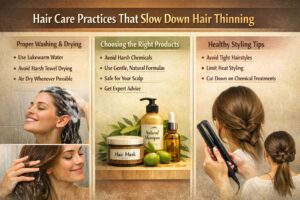
- Choose sulfate-free shampoos to avoid dryness.
- Condition well and rinse with cool water to seal the cuticle.
Post-Wash Care
- Use a microfiber towel or T-shirt to dry gently.
- Detangle with a wide-tooth comb.
- Apply leave-in conditioners, serums, or anti-frizz creams for lasting smoothness.
Nighttime Care
- Sleep on silk or satin pillowcases to reduce friction.
- Try protective braids or buns to prevent tangles.
Styling Tips
Heat Protection
- Always use heat protectant sprays.
- Limit use of straighteners and dryers.
- Opt for lower heat settings to protect hair from damage.
Natural Styling
- Embrace natural texture with curl creams or sea salt sprays.
- Use protective hairstyles like braids or buns.
- Avoid tight styles that can cause breakage.
Accessories
- Use headbands, scarves, and gentle hair ties instead of rubber bands.
Effective Products for Loose Hair Management
- Leave-in conditioners, serums, anti-frizz creams for hydration.
- Natural oils (argan, coconut, jojoba) – some of the best home remedies for hair fall.
- Weekly masks or DIY hair treatments (honey, yogurt, avocado).
- Curl gels, sea salt sprays, volumizing mousses for styling.
Using oils is also part of natural hair treatment at home for hair fall, boosting shine and promoting hair regrowth.
Long-term Healthy Hair Practices
Regular Trims
- Trim every 6–8 weeks to prevent split ends.
- Supports hair growth and stronger regrowth.
Balanced Diet
- Eat nutrient-rich foods (greens, nuts, fish).
- Stay hydrated.
- Consider supplements like biotin (consult your doctor).
Avoid Over-processing
- Limit coloring, bleaching, and chemical treatments.
- Choose gentle, natural products to reduce breakage.
Conclusion
Managing loose, frizzy hair doesn’t have to be overwhelming. By knowing your hair type, following a simple daily routine, and using the right products, you can stop hair fall, encourage regrowth, and maintain healthy hair. Whether you’re searching for the best hair oil for women hair growth, hair fall remedy ideas, or practical tips on hair loss how to stop, these steps work for straight, wavy, curly, or coily hair. Embrace your natural texture, care for your cuticles, and make use of effective loose hair management tips for everyday confidence and long-term results.
For those seeking expert-backed solutions, hairsncares.com offers a digital healthcare platform dedicated to personalized hair loss diagnosis and treatment. You can take an online hair test to identify your unique hair loss patterns, consult certified dermatologists remotely, and receive a detailed diagnosis report along with a prescription-based management plan. All recommended treatments are automatically added to your online cart for convenient purchase. Beyond medical care, you’ll also gain access to nutrition, stress, and lifestyle guidance, while working with a dedicated hair coach to track progress and optimize results.
By combining medical expertise with smart technology, hairsncares.com delivers end-to-end hair care management that is accessible, affordable, and tailored to every individual. If you’re serious about tackling hair fall and want the best mix of science and convenience, take the first step today with hairsncares.com.